How to Prepare Your Business for Year-End Accounts
Year-end accounts don’t need to mean a last-minute scramble. Here’s what to prepare, what your accountant will need and how to make the process smoother.
What are year-end accounts?
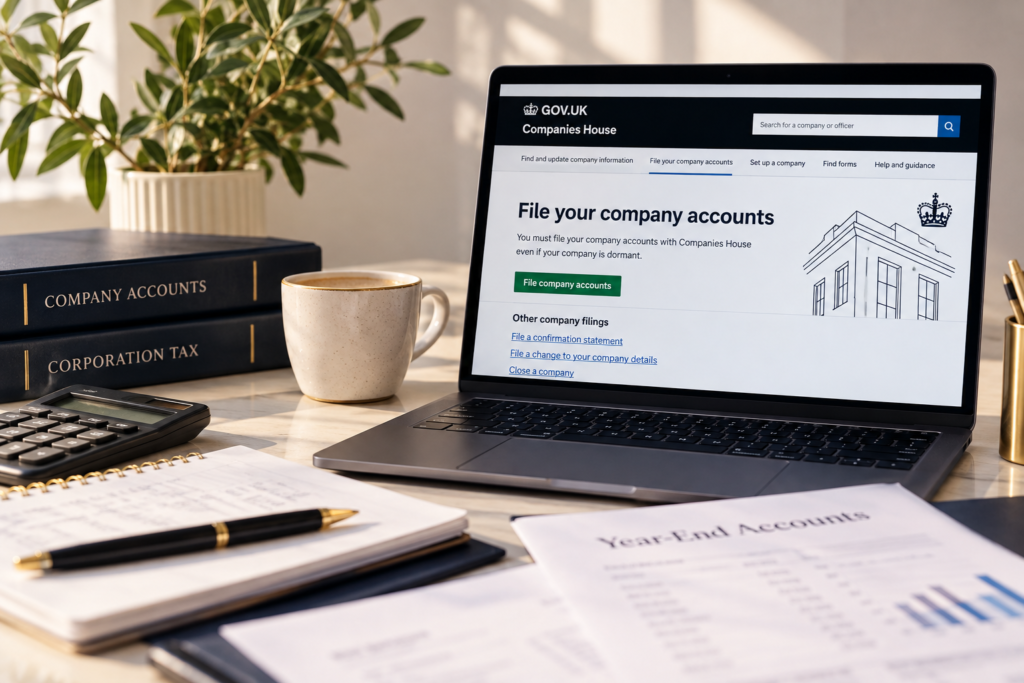
Year-end accounts provide a summary of your business’s financial activity over its accounting period. They show how the business has performed and form the basis for calculating certain tax obligations.
For limited companies, statutory annual accounts are prepared and filed with Companies House, with financial information also used for the company’s Corporation Tax return. Sole traders do not file statutory accounts with Companies House, but accurate year-end figures are still needed to complete their Self Assessment tax return.
The important point: Good year-end accounts start with good bookkeeping. Keeping your records organised throughout the year makes the year-end process quicker, easier and less likely to uncover unexpected problems.
What should you prepare for year-end accounts?
The exact information your accountant needs will depend on your business, but having the key records ready before the year-end work begins can save a lot of time and reduce unnecessary back-and-forth.
Bank statements
Provide statements for all business bank accounts covering the full accounting period, including the balance at your year end.
Sales and income records
Make sure your sales invoices and other sources of business income are recorded and that any missing transactions have been identified.
Expenses and receipts
Check that business expenses are recorded and supporting invoices or receipts are available where needed.
Depending on your business, you may also need:
- details of unpaid customer invoices and supplier bills;
- payroll records;
- VAT returns and supporting records;
- details of business assets purchased or sold;
- stock or work in progress, where relevant;
- loan and finance statements;
- details of money introduced to or withdrawn from the business;
- information about unusual or one-off transactions.
Before you send everything to your accountant
Before handing over your records, it is worth doing a quick review of your bookkeeping. You do not need to fix every accounting issue yourself, but complete and organised records can make the year-end process much smoother.
✓ Check that all bank transactions are recorded
Look for missing or duplicated transactions and make sure your accounts are reconciled.
✓ Check for missing expenses
Review receipts, invoices and payments that may not yet have been included in your bookkeeping.
✓ Identify personal transactions
If personal spending has gone through the business account, make sure it can be clearly identified.
✓ Flag anything unusual
Loans, asset purchases, large one-off transactions or anything you are unsure how to categorise should be highlighted for your accountant.
✓ Make sure your records cover the full year
Check that you have provided information from the beginning to the end of the relevant accounting period.
Limited company or sole trader? The year-end process is different.
What happens at year end depends on how your business is structured. A limited company has different filing and reporting requirements from a sole trader, so it is important to understand what actually applies to you.
Annual accounts and Corporation Tax
A limited company normally needs to prepare annual statutory accounts and file them with Companies House. The company’s financial information is also used to prepare its Company Tax Return for HMRC.
Key deadlines:
- Annual accounts: normally 9 months after the company’s financial year end.
- Corporation Tax payment: normally 9 months and 1 day after the accounting period ends.
- Company Tax Return: normally 12 months after the accounting period ends.
You can check the current filing and Corporation Tax deadlines in the official GOV.UK guidance.
Accounts for Self Assessment
Sole traders do not file statutory annual accounts with Companies House. Instead, your business records are used to calculate your taxable profit and complete your Self Assessment tax return.
Key deadline:
- Online Self Assessment and tax payment: normally 31 January following the end of the relevant tax year
Your individual circumstances can affect what needs to be reported and when.
HMRC also provides a tool to check your tax filing and payment deadlines.
How early should you prepare for year end?
Year-end preparation should ideally start before your accounting period has finished. You do not need to prepare the accounts early, but making sure your bookkeeping is complete and any missing information is identified can prevent delays later.
If you leave everything until your filing deadline is approaching, there may be less time to resolve missing records, investigate unusual transactions or deal with unexpected tax issues.
Bring your bookkeeping up to date, reconcile your bank accounts and identify missing invoices, receipts or other records.
Send the requested records and information to your accountant while the transactions are still relatively fresh.
Review the figures and answer any outstanding questions so your accountant can finalise the accounts and relevant tax return.
Do not confuse your year end with your filing deadline. Your accounting period may have ended months before your accounts or tax return are due. Preparing early gives you more time to deal with any issues and understand upcoming tax payments.
Common year-end mistakes to avoid
Most year-end problems are not caused by complicated accounting. They usually come from incomplete records, missing information or leaving everything until the last minute.
Leaving bookkeeping until the deadline
Reconstructing a full year from bank statements and receipts takes longer and increases the chance of something being missed.
Mixing personal and business spending
This creates unnecessary work when transactions need to be reviewed and correctly classified.
Missing invoices or receipts
Incomplete records can mean legitimate business expenses are overlooked or further information has to be requested.
Forgetting about cash or non-bank transactions
Not every business transaction necessarily appears clearly in the main bank account.
Not telling your accountant about major changes
New loans, assets, employees, VAT registration or unusual transactions may affect the year-end work.
Sending information in stages
Repeatedly sending additional documents can slow the process considerably. Where possible, provide a complete set of records together.
Frequently asked questions
1. When should I send my year-end records to my accountant?
Ideally, as soon as possible after your accounting period ends and once your bookkeeping is complete. You do not need to wait until the filing deadline. Sending your records earlier gives more time to identify missing information and resolve any queries.
2. Do I need every receipt for my year-end accounts?
You need adequate records to support your business income and expenses. Receipts, invoices, bank records and other supporting documents should be retained where relevant. If something is missing, speak to your accountant rather than simply excluding or guessing the transaction.
3. What if my bookkeeping is not up to date?
Your accounts can still be prepared, but additional bookkeeping or clean-up work may be needed first. The earlier this is identified, the easier it is to get your records ready before the filing deadline.
4. Is my business year end the same as the tax year?
Not necessarily. Sole traders generally report their business results by tax year for Self Assessment, while limited companies have their own accounting periods and financial year ends.
5. Can my accountant prepare my year-end accounts from bank statements alone?
Bank statements are an important part of your records, but they may not provide all the information needed. Your accountant may also need invoices, receipts, details of assets and liabilities, loan information and explanations for particular transactions.
Need help getting your year-end accounts sorted?
Whether your bookkeeping is already up to date or needs some attention before your accounts can be prepared, I can help you get everything organised and ready for filing.
Space Accounting provides year-end accounting and tax support for sole traders and small limited companies, with clear guidance on what you need to provide and what happens next.
Last updated: September 2026