Sole Trader vs Limited Company Expenses: What Can You Actually Claim?
Business expenses can reduce your taxable profit, but the rules are not identical for sole traders and limited companies.
Many everyday business costs can be claimed under either structure. However, running a limited company creates some important differences, particularly when the company pays expenses or provides benefits for its director or employees.
So what can both structures claim, what works differently, and which expenses are often misunderstood?
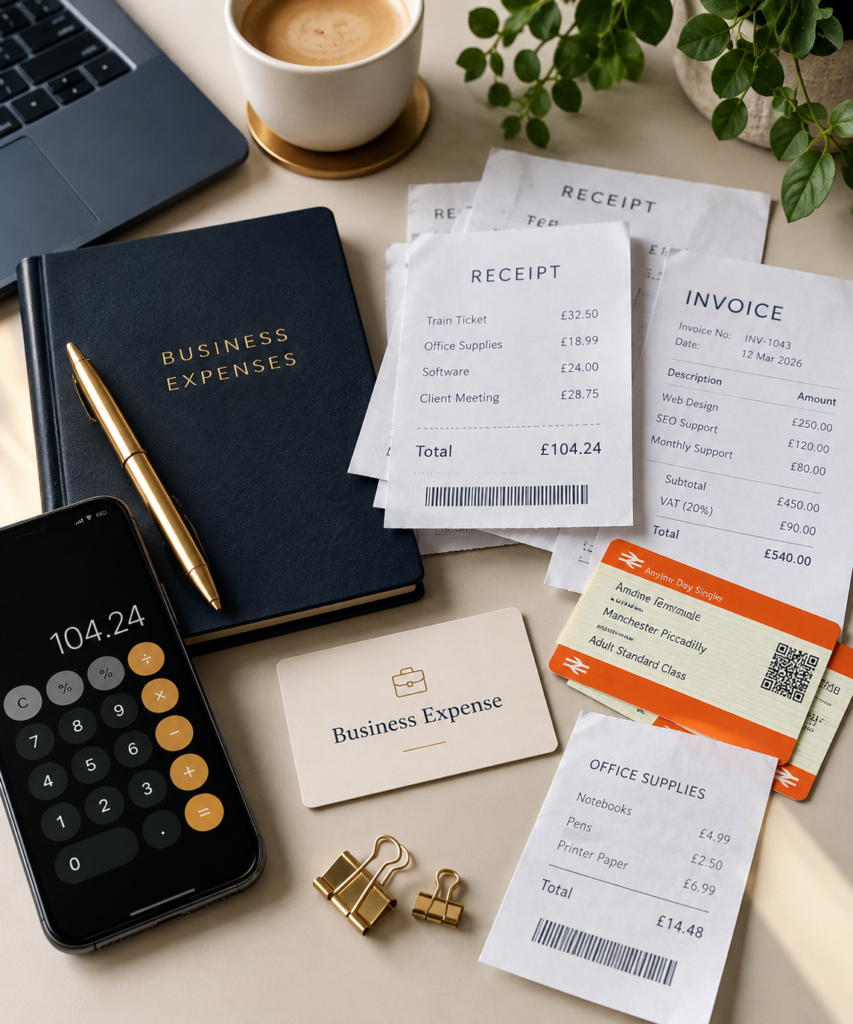
First: the basic rule is broadly the same.
Whether you are a sole trader or run a limited company, a business expense generally needs to have a genuine business purpose before it can reduce taxable profits.
For sole traders, HMRC’s general rule is that expenses must be incurred “wholly and exclusively” for the purposes of the trade. Where something has both business and personal use, you may sometimes be able to claim only the identifiable business element.
Limited companies also need to consider whether expenditure is incurred wholly and exclusively for the purposes of the company’s trade, although additional rules can apply when the company provides something to a director or employee.
The key difference isn’t that Ltd companies can claim everything and sole traders can’t. Most ordinary business expenses are available to both. The interesting differences are in how certain costs are treated and the additional rules that exist for companies, directors and employees.
Business expenses both structures can usually claim
Many everyday business expenses are treated similarly whether you operate as a sole trader or through a limited company. The key is that the cost must relate to the business and meet the relevant tax rules.
Accounting & professional fees
Accountancy, bookkeeping and certain professional fees relating to the business can generally be allowable expenses.
Software & subscriptions
Accounting software, cloud storage and other subscriptions used for the business can usually be claimed.
Marketing & advertising
Website costs, online advertising, printing and other genuine business marketing costs can generally be deductible.
Business travel
Qualifying travel for business purposes can be claimed, although ordinary commuting and private travel are treated differently.
Equipment & office costs
Business equipment, stationery, postage and other office costs may qualify, although larger purchases can be subject to capital allowance rules.
Insurance & professional subscriptions
Relevant business insurance and qualifying professional memberships or subscriptions can generally be claimed.
Having a receipt does not automatically make something a business expense. The purpose of the cost and any private element still matters.
Where the expense rules start to look different
This is where the distinction between a sole trader and a limited company becomes more important. Because a limited company is legally separate from its owner, some costs paid by the company are treated differently from expenses paid by a sole trader.
Mobile phone
SOLE TRADER
If you use the same mobile phone for business and personal calls, you can generally claim the identifiable business proportion of the cost. The private element is not an allowable business expense.
LIMITED COMPANY
A limited company can provide a director or employee with one mobile phone or SIM card for private as well as business use without creating a taxable benefit, provided the contract is between the company and the supplier.
Example: If your company takes out and pays for the mobile contract directly, the treatment can therefore be more favourable than simply reimbursing a director for a personal phone contract.
Trivial benefits
SOLE TRADER
A sole trader cannot provide themselves with tax-free trivial benefits. Buying yourself a gift, voucher or personal treat is a private expense rather than a business cost.
LIMITED COMPANY
A limited company can provide qualifying trivial benefits to directors and employees without Income Tax or National Insurance. Each benefit must cost £50 or less, must not be cash or a cash voucher, cannot be a reward for work and cannot be something the recipient is contractually entitled to.
Example: A director could receive several qualifying benefits during the year, for example, £40 gift cards for non-work-related occasions, provided each benefit meets the rules and the £300 annual limit is not exceeded.
Pension contributions
SOLE TRADER
A sole trader can make personal pension contributions and may receive personal tax relief on qualifying contributions. However, the contribution is not treated as a business expense when calculating the taxable profit of the sole trade.
LIMITED COMPANY
A limited company can make employer pension contributions for a director. Qualifying contributions can generally be deductible when calculating the company’s taxable profits, provided they meet the relevant rules, including the wholly and exclusively test.
Example: Instead of taking additional company profit as a dividend and then making a personal pension contribution, a limited company may be able to pay an employer contribution directly into the director’s pension. This can reduce the company’s taxable profit without first paying that amount to the director as salary or dividend.
Annual staff events
SOLE TRADER
A sole trader cannot claim the cost of taking themselves out for a Christmas meal or similar social event simply because it relates to their business. If the business has employees, separate staff entertaining rules may apply.
LIMITED COMPANY
A limited company can provide an annual party or similar annual event for its employees, including directors, without creating a taxable benefit where the conditions are met.
The event must be annual, available to employees generally and cost no more than £150 per head. If several qualifying annual events are held, the £150 limit applies to their combined cost per head for the events being treated as exempt.
Example: A one-director company could hold an annual Christmas meal costing £120 per head. Provided the conditions for the exemption are satisfied, it can fall within the annual function exemption.
Important: £150 is an exemption, not an allowance. If an event costing £170 per head does not qualify for the exemption, you cannot simply treat the first £150 as tax-free.
Salary and personal drawings
SOLE TRADER
A sole trader cannot pay themselves a salary and claim it as a business expense. Money taken from the business for personal use is a drawing and does not reduce the taxable profit of the business.
LIMITED COMPANY
A limited company is legally separate from its director. If the company pays the director a salary through PAYE, the salary and any employer’s National Insurance due can generally be business costs when calculating the company’s taxable profit, provided the remuneration is for the purposes of the business.
Example: If a sole trader takes £12,000 from the business for personal use, their taxable profit does not fall by £12,000. A limited company paying a director a qualifying £12,000 salary is dealing with a company employment cost rather than a personal drawing.
What about simplified expenses for sole traders?
Sole traders can still use HMRC’s simplified expenses for certain costs, including eligible vehicle costs, working from home and living at business premises. Limited companies cannot use the simplified expenses scheme.
However, simplified expenses do not apply to all business costs. Most expenses still need to be based on the actual costs incurred.
For businesses using Making Tax Digital for Income Tax, digital record-keeping requirements also need to be considered. If you are certain that you will use a simplified expenses method for an eligible category, HMRC says you do not need to create digital records of the actual costs for that category. If you are unsure, HMRC recommends keeping digital records of the actual expenses and making the appropriate adjustment before finalising your Income Tax position.
Simplified doesn’t mean estimated. The flat-rate method is only available for specific categories and you still need the records required to support the calculation, for example, business mileage or hours worked from home.
Expenses that are commonly misunderstood
Whether you are a sole trader or run a limited company, paying for something from a business bank account does not automatically make it tax deductible. Some costs are commonly misunderstood.
Everyday clothing
Ordinary clothing is generally not allowable simply because you wear it for work. Uniforms, protective clothing and certain costumes can be treated differently.
Client entertaining
Taking a client for lunch may have a genuine business purpose, but business entertaining is generally not deductible when calculating taxable profits. Different rules can apply to employee entertaining.
Fines and penalties
Many fines and penalties, including fines for breaking the law, are not allowable deductions for tax purposes simply because they arose while running the business.
Personal costs
Personal costs do not automatically become business expenses simply because they are paid through the business. Where a cost has both business and private use, the treatment depends on the type of expense and the rules that apply to your business structure.
A useful question isn’t just “Did the business pay for it?” It’s “What was the expense actually for, and how do the tax rules treat it?”
Expenses shouldn't decide your business structure.
A limited company does offer some expense and benefit options that are not available to a sole trader. But that alone is rarely a good reason to incorporate.
Tax on profits, how much money you need to withdraw personally, administration, liability and your future plans for the business can have a much bigger impact on the decision.
If you’re considering changing structure, read our guide to Sole Trader vs Limited Company: When Is It Actually Worth Going Ltd?
Not sure what your business can actually claim?
Getting expenses right isn’t about claiming as much as possible. It’s about understanding which costs genuinely qualify and applying the right rules to your business structure.
I can help you keep your records organised, identify allowable business expenses and make sure your bookkeeping reflects how your business actually operates.
Last updated: September 2026